Sunday, March 17, 2013

THE BUTTERFLY OF BACMAN GEOTHERMAL PRODUCTION FIELD


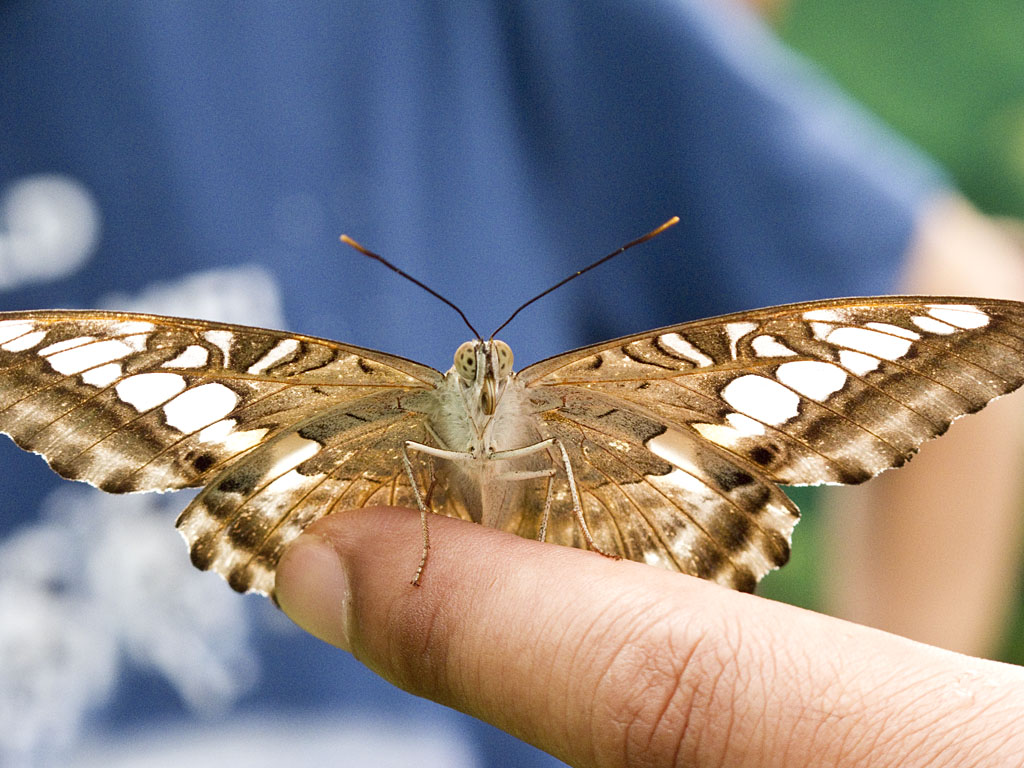
[Photo: Taken at the butterfly farm of EDC in Bicol]

Last year (March 2012) the Postnovitiate community went to Bicol for our yearly summer outing. We wanted our Postnovices to visit our Salesian houses in Naga and in Legazpi, as well as the local tourist spots.
We went to Naga cathedral, seminary and museum, the Basilica and shrine of our Lady of Penafrancia, the Panicuason hot springs, Cagsawa, Daraga church, the house of the congregation founded by St. Louis Guenella and the BacMan Geothermal Production Field.

The field trip to BacMan was the most special. It covers the boundary of Legaspi City, Sorsogon City, Bacon District of Sorsogon City and the town of Manito Albay in the Bicol Region, South of Luzon.

It is owned by EDC. Its official website says: “Energy Development Corporation is a pioneer in the geothermal energy industry with more than three decades of proven business viability. It has helped discover new ways of developing and commercializing renewable energy right at the heart of the resource – wherever the location and whatever the condition. From exploration and production of water-based steam power to generation of electricity for commercial use, we build some of the world’s pioneering and most complex steam fields.”

Besides viewing the geothermal plant from afar, we were also brought to the Twin Falls, the hot spring and steam vents (the smell of sulphur was strong but bearable) and the butterfly farm. It was there that we were able to see a variety of butterflies. And we were delighted to have them rest on our fingers after some cajoling.

The farm has a chart containing the life cycle of a butterfly: egg, caterpillar, pupa or chrysalis and finally, adult or imago. It served as a review of what we had already taken up in biology. But now it serves another purpose, a spiritual one. It is a good reminder of the transformation that should happen to us during the season of Lent and which should culminate with Easter. Moreover, the pupa stage also seems to me to be an appropriate image for Jesus in the tomb while the adult stage expresses well his Resurrection from the sleep of death.

May our good will and the grace of God help us achieve this transformation, this metanoia that is at the heart of Ash Wednesday ritual. 

Saturday, March 9, 2013

THE MAN ON THE SHROUD


[Photo – 3-D rendering of the image found in the Shroud of Turin. Photo taken at the Santa Croce in Gerusalemme, Rome.]

[This piece is not my own. I no longer know where I got it.]

WHAT IS CRUCIFIXION?

 A medical doctor provides a physical description:

 The cross is placed on the ground and the exhausted man is quickly thrown backwards with his shoulders against the wood. The legionnaire feels for the depression at the front of the wrist. He drives a heavy, square wrought-iron nail through the wrist deep into the wood. Quickly he moves the other side and repeats the action, being careful not to pull the arms too tightly, but to allow some flex and movement. The cross is then lifted into place. 

The left foot is pressed backward against the right foot, and with> both feet extended, toes down, a nail is driven through the arch of each, leaving the knees flexed. The victim is now crucified. 

As he slowly sags down with more weight on the nails in the wrists, excruciating fiery pain shoots along the fingers and up the arms to explode in the brain- the nails in the wrists are putting pressure on the median nerves. As he pushes himself upward to avoid this stretching torment, he places the full weight on the nail through his feet. 

Again he feels the searing agony of the nail tearing through the nerves between the bones of his feet. As the arms fatigue, cramps sweep through his muscles, knotting them deep relentless, and throbbing pain.
With these cramps comes the inability to push himself upward to breathe.  Air can be drawn into the lungs but not exhaled. He fights to raise himself in order to get even one small breath.

  Finally, carbon dioxide builds up in the lungs and in the blood stream, and the cramps partially subsided. Spasmodically, he is able to push himself upward to exhale and bring in life-giving oxygen. 

Hours of limitless pain, cycles of twisting, joint-renting cramps, intermittent partial asphyxiation, searing pain as tissue is torn from his lacerated back as he moves up and down against rough timber. Then another agony begins: a deep, crushing pain deep in the chest as the pericardium slowly fills with serium and begins to compress the heart.

It is now almost over-the loss of tissue fluids has reached a critical level the compressed heart is struggling to pump heavy, thick, sluggish  blood into the tissues-the tortured lungs are making frantic effort to  gasp in small gulps of air. 

He can feel the chill of death creeping through his tissues. Finally, he can allow his body to die. All this the Bible records with the simple words, "and they crucified Him" (Mark 15:24).

What wondrous love is this!

Imagine the pain and suffering our Lord, Jesus Christ went through for us. Because of the brutality, crucifixion was given a sentence to only its worst offenders of the law. Thieves, murderers, and rapists would be the types who got crucified. Yet, here Jesus is being crucified between two hardened criminals. What did Jesus do? Did he murder anyone? Did he steal anything?

The answer as we all know is NO!! Jesus did nothing to deserve this type of death, yet he went willing to die, between 2 thieves, so that we might be saved. 

Saturday, March 2, 2013

LAKE CALIRAYA


[Photo: Caliraya Lake]

Laguna Travel Guide describes Lake Caliraya this way: “Interestingly, Lake Caliraya in Laguna is a man-made lake situated in three towns - Lumban, Cavinti and Kalayaan. In 1937,  US Army Engineers created Lake Caliraya by flooding the Cavinti valley of Sierra Madre in order to generate hydroelectric power for Metro Manila. Entrepreneurs then saw the potential of the area and built two communities as ecological destinations where one can enjoy nature's unspoiled beauty. The man-made lake covers partly submerged land areas and this resulted to numerous islands complete with coves. These islands are now built with vacation houses, private villas, and resorts.”

October 26, 2011. Our community went up to Caliraya for our semestral break outing. There are two routes to Caliraya: via Rizal and via Laguna. The same Laguna Travel Guide gives the following directions for those wanting to take the Laguna route: “Take last exit to Calamba (via SLEX), turn right to Calamba Junction towards Los Banos all the way to Pagsanjan Church. Turn left passing through to Palacol Bridge going toward Barangay Bagong Silang and start ascent to Caliraya Lake.”

Although our starting point was Canlubang , the trip was a bit long. On the upside the roads were generally good, except for some portions on the way up to the lake. Since it was still early and the weather was cool and inviting, we decided to take a breather along the last leg of the journey and take pictures. (With the advent of digital cameras, photography has been democratized and you cannot claim something happened unless you are able to provide pictures to back it up.)

The scenery before us was nothing but one of peace and quiet, broken only by the occasional rustling of leaves and the happy chirping of birds—until we came. The countless picture-taking, individual and group shots, was accompanied by a Babel of voices—“Let’s take a picture here.” “Take a second shot.” “1, 2, 3, smile!” “Here. Take the camera. I want to have my picture taken, too.” And before we left, someone reminded us about the obligatory jumping shot.

The resort we went to was called Caliraya Paradise. It was leased to a Korean couple who happened to be Catholics. The resort was clean, well-kept and had large open spaces. An added bonus. We had the resort to ourselves. Perhaps, it was because it was a weekday. On the second day of our stay a family did come, a couple and their daughter. We learned that they were the owners of the Rudy Project business. But they did not stay long. They left sometime after lunch.

I appreciated spending our semestral break at Caliraya Paradise. I wanted the escape to a place that was peaceful, quiet and isolated. That’s the way I get my batteries recharged.

Lent is a time for re-charging our batteries. It is a time for getting re-energized. In religious terms, lent is a 40-day retreat meant to make us fit and strong for spiritual combat. Just like the Master who went to the desert to do battle against Satan and came out victorious, so also we enter the Lenten season in the hope of victory against the evil desires the pull our hearts away from God.

These are the traditional Lenten practices that are available to us for this spiritual combat: prayer, fasting and almsgiving. They have to be understood in broad terms. Prayer is taking time out for God. It is sharing with God what’s happening in our minds (share with him our thoughts) and in our hearts (share with him our feelings). Fasting is not just about food. It is about depriving ourselves of things that we like in order to strengthen our capacity to say “no” to temptation. If we are able to say “no” to smoking during Lent, it is highly probable that we can say “no” to temptation. Almsgiving is not just about giving something to beggars, although this is stressed in the Bible. It is also about any act of kindness.

The Ash Wednesday ritual is accompanied by the words “Turn away from your sins and believe in the Gospel.” If we do turn away from sin, where do we turn? We turn to God. Turning away from sin in order to turn to God is what we usually call conversion. But I prefer the expression “pagbabalik loob sa Diyos” (reconciling with God). And to me, this is the highlight of Lent. And this we celebrate in the Sacrament of Reconciliation. Lent, therefore, would be seriously incomplete with going to confession. 

Saturday, February 23, 2013

HAVE YOU EVER PEEPED THROUGH A KEY HOLE?


[Photo: St. Peter’s Basilica through a key hole of the gate of the Knights of Malta]
[Photo: Tourists lining up to take a peek at the key hole.]

I took these photos on July 2, 2008 on one of my regular Saturday excursions in Rome. The website reidsitaly.com describes the photograph this way: “Peek through this keyhole on a piazza designed by Piranesi in 1765, and you see a garden path that ends with bushes perfectly framing the dome of St. Peter's in the distance. The gateway, incidentally, leads to the gardens of the Knights of Malta (I Cavalieri di Malta), who are actually called the Knights of St. John Hospitaler, one of the last surviving orders of knights left over from the Crusades. The knights left the island of Malta long ago, and their headquarters are now here in Rome. In fact, the Italian state recognizes their sovereignty, which means there are actually three nations within Rome (Italy, the Vatican, and the Knights of Malta).” [Outside Rome there is a fourth state, San Marino. I do not know if the Knights of Malta can be called a nation or a state.]

I went to the Aventine Hill on this particular Saturday to see three places: the Basilica of Sant’Anselmo, the church of San Alessio, and that of Santa Sabina. [The Aventine Hill is one of the Seven Hills of Rome. The Book of Revelation speaks of the dragon with seven heads. The dragon is the Roman empire symbolized by the city of Rome and the seven heads are the Seven Hill of Rome.] I only discovered the famous key hole of the Knights of Malta by accident. I saw a small tourist bus park in the piazza. Out came the occupants. They looked Chinese. They made a bee line for a gate and one by one looked into a key hole. My curiosity was piqued. What were they looking at? When they left, I went to the gate and looked into the key hole. And what did I see? The cupola of St. Peter’s beautifully framed by trees.

When you speak of the Basilica of St. Peter, your thoughts immediately turn to the Pope. And this time, with sadness. Benedict XVI has publicly announced his intention to renounce the papacy on February 28 at 8 pm, local time. He did it out of love for the church. He confessed that he no longer has the strength to carry out the responsibility of the papacy. His words: “"I have convoked you to this Consistory, not only for the three canonizations, but also to communicate to you a decision of great importance for the life of the Church. After having repeatedly examined my conscience before God, I have come to the certainty that my strengths, due to an advanced age, are no longer suited to an adequate exercise of the Petrine ministry.”

The world reacted with shock. The last time a Pope resigned the papacy was 600 years ago. Luis Antonio Cardinal Tagle expressed his surprise and sadness this way: “Pope Benedict XVI’s renunciation of the ministry as Bishop of Rome on February 11, 2013 came as a surprise. The announcement also brought sadness to us. We felt like children clinging to a father who bids them farewell. But sadness gives way to admiration for the Holy Father’s humility, honesty, courage and sincerity. His paramount desire is to promote the greater good of the Church.”

Next month in March, the Cardinals will converge in Rome and elect a successor to Benedict XVI. Cardinal Tagle’s name has been bandied about as a possible successor. He is thus a “papabile”. But let us not forget the saying: “He who enters the conclave a pope, comes out a cardinal.”

To inform us about developments regarding Benedict XVI’s eventual giving up of the papacy and regarding the conclave and its aftermath, I have requested Fr. Joel Camaya to be our “reporter” from Rome. He has gladly accepted to do this service for us here in the Philippines. Thanks, Fr. Joel.


Saturday, February 16, 2013

ST. JOHN BOSCO AND ST. LOUIS GUANELLA


[Photo: San Giuseppe al Trionfale – the church by St. Louis Guanella in honor of St. Joseph]

From an article I wrote for the Salesian Bulletin…

Don Guanella was very much attached to Don Bosco. In fact, he became a Salesian in temporary vows for three years (1875-1878). But he had to leave Don Bosco in obedience to a higher calling. God had set him aside to work for the poor, the aged, the orphans and the handicapped. To this end he founded two religious congregations: the Servants of Charity and Daughters of Our Lady of Divine Providence.

But his attachment to Don Bosco remained. A year or so after Don Bosco's death, he wrote to Don Rua: "I want to record my immense attachment to Don Bosco. Certainly, leaving him was like leaving home. There (in the Congregation) I had the example of so many virtues, and the spiritual direction of Don Bosco who did so much good to all. Don Bosco's heart was like a magnet which drew all to himself; his words, few and well-pondered, were as lightning flashes to the mind.”

While reading the life of St. Louis Guanella, I discovered several interesting similarities between him and Don Bosco. I would like to point out a few of them.

In 1858 Don Bosco went to Rome to seek an audience with Pius IX regarding his plan of establishing a religious congregation. In his second audience on Sunday evening, March 21, he was asked by the Pope if he ever had any supernatural revelation about his undertakings. With some embarrassment, Don Bosco told the Pope everything he had seen in his dreams, beginning with his dream at the age of nine. Don Guanella, too, had an extraordinary dream at the age of nine. It was the day of his First Holy Communion. In that dream a Lady (that was how he called the Blessed Virgin) showed him everything he would do for the poor. Many years later in 1907 in a conversation with his nephew, Fr. Constantino Guanella, he said that the dream was like watching a movie.

Don Bosco and Don Guanella were both diocesan priests. Don Bosco belonged to the archdiocese of Turin while Don Guanella belonged to the diocese of Como. Both of them suffered because of misunderstanding with their respective bishops.

In a time of anti-clericalism, both of them took up the defense of the Church and the Pope. And for that they suffered persecution and harassment from government authorities. Both of them were put under police surveillance for a time, especially when they were preaching. And speaking of the Pope, if Don Bosco found a staunch supporter and friend in Pius IX, Don Guanella found the same thing in Pius X. The close friendship between Don Bosco and Pius IX was attested by the fact that the Pope could joke with Don Bosco. The same was true with Don Guanella and Pius X.

Don Bosco and Don Guanella lived at a time of great social change that brought about the marginalization of the poor. They responded by becoming apostles of charity along with other contemporary Saints like St. Joseph Cafasso, St. Joseph Cottolengo, St. Leonard Murialdo and Blessed Louis Orione. Don Bosco gave himself to the education of growing boys and young men, especially those who are poorer and in danger. Don Guanella saw his mission in the field of education but also in the care of the sick, the aged, the orphans and the handicapped. In this he was inspired by the example of St. Joseph Cottolengo whose influence made Don Guanella call his houses, “Houses of Providence”.

Both of them were founders of two religious congregations. Don Bosco founded the Salesian Society of St. Francis de Sales and then the Institute of the Daughters of Mary Help of Christians. Don Guanella founded the Daughters of St. Mary of Providence and later, the Servants of Charity. In the case of Don Bosco he transformed an existing association (the Association of the Daughters of Mary Immaculate) into a religious congregation. The association had been founded by a diocesan priest (Fr. Dominic Pestarino) who later joined Don Bosco and became a Salesian himself. In Don Guanella’s case the Daughters of St. Mary of Providence already began as a religious community. It had been founded by a pious priest, Fr. Coppini. When he died, the bishop asked Don Guanella to take over from him.

Both of them built a church in Rome. Considering the wish of Leo XIII a command, Don Bosco built the Basilica of the Sacred Heart. He also established an Association of the Sacred Heart based in that basilica. Don Guanella, on the other hand, was inspired to build a church and start an association in honor of St. Joseph, the patron of the dying. And when Pius X expressed the desire to have a church built in a very poor area near the Vatican, Don Guanella saw that as a confirmation of his desire to build the Basilica of St. Joseph at Trionfale, Rome.

Both of them published a magazine: Don Bosco’s Salesian Bulletin and Don Guanella’s Divine Providence. In the August 1908 issue of “Divine Providence” we find a prayer with these words: “May the great soul of John Bosco, who from on high protects the Congregation of his sons the Salesians, now too numerous to count, be pleased to turn his gaze on the Institutes of Divine Providence and extend the kindness of his protection on all those who belong to these works and especially on his devoted admirer and student, Fr. Louis Guanella.”

There is still one last common denominator. Both of them have been canonized by the Pope. Declared Saints, they are presented to us as models of the high standard of Christian life and as intercessors. To these two men who became friends on earth and remain friends in heaven, we pray: St. John Bosco and St. Louis Guanella, pray for us.

Saturday, February 9, 2013

VALENTINE'S DAY


[Photo: Bones of St. Valentine at Santa Maria in Cosmedin]


Santa Maria in Cosmedin is best known for Bocca della Verita’, the "Mouth of Truth" in its porch. Less known is the fact that it also contains what is believed to be the bones of St. Valentine (skull crowned with flowers and other bone fragments).

According to Catholic.org St. Valentine is the patron of love, young people, and happy marriages.

There are many St. Valentines. According to the same Catholic.org, “Valentine was a holy priest in Rome, who, with St. Marius and his family, assisted the martyrs in the persecution under Claudius II. He was apprehended, and sent by the emperor to the prefect of Rome, who, on finding all his promises to make him renounce his faith ineffectual, commanded him to be beaten with clubs, and afterwards, to be beheaded, which was executed on February 14, about the year 270.”

The many St. Valentines has given rise to suspicion that he might be a fiction. But Catholic.org thinks that he “really existed because archaeologists have unearthed a Roman catacomb and an ancient church dedicated to Saint Valentine. In 496 AD Pope Gelasius marked February 14th as a celebration in honor of his martyrdom.”

History Channel explains how St. Valentine’s feast was associated with romance.

“While some believe that Valentine's Day is celebrated in the middle of February to commemorate the anniversary of Valentine's death or burial--which probably occurred around A.D. 270--others claim that the Christian church may have decided to place St. Valentine's feast day in the middle of February in an effort to "Christianize" the pagan celebration of Lupercalia. Celebrated at the ides of February, or February 15, Lupercalia was a fertility festival dedicated to Faunus, the Roman god of agriculture, as well as to the Roman founders Romulus and Remus.”

“To begin the festival, members of the Luperci, an order of Roman priests, would gather at a sacred cave where the infants Romulus and Remus, the founders of Rome, were believed to have been cared for by a she-wolf or lupa. The priests would sacrifice a goat, for fertility, and a dog, for purification. They would then strip the goat's hide into strips, dip them into the sacrificial blood and take to the streets, gently slapping both women and crop fields with the goat hide. Far from being fearful, Roman women welcomed the touch of the hides because it was believed to make them more fertile in the coming year. Later in the day, according to legend, all the young women in the city would place their names in a big urn. The city's bachelors would each choose a name and become paired for the year with his chosen woman. These matches often ended in marriage.”

Since Valentine's day is associated with love, it is a good idea to ask: What is love?

Years ago Boy George attempted to define love. He probably failed for he ended in frustration by just declaring “love is love”.

For those who studied the Christian Becoming Series when they were in 4th year high school, they might still remember this definition: “Love is the power in us that moves us to go out of ourselves to give of ourselves for the one we love.” The definition does not move one’s heart. But it does give you a measuring stick to determine whether you are loving or not and most of all, in the words of the Bee Gees, how deep is your love.

In 1 Cor 13 we find what has been called “Ode to Love”. It contains St. Paul’s thoughts about love. But since the Bible is inspired, it is also a declaration of how God thinks about love. And with God’s Word in our mind and heart, let us prepare to celebrate Valentine’s day.

If I speak in human and angelic tongues but do not have love, I am a resounding gong or a clashing cymbal. 2And if I have the gift of prophecy and comprehend all mysteries and all knowledge; if I have all faith so as to move mountains but do not have love, I am nothing. 3If I give away everything I own, and if I hand my body over so that I may boast but do not have love, I gain nothing.

4 Love is patient, love is kind. It is not jealous, [love] is not pompous, it is not inflated, 5it is not rude, it does not seek its own interests, it is not quick-tempered, it does not brood over injury, 6it does not rejoice over wrongdoing but rejoices with the truth. 7It bears all things, believes all things, hopes all things, endures all things.

8 Love never fails. If there are prophecies, they will be brought to nothing; if tongues, they will cease; if knowledge, it will be brought to nothing. 9For we know partially and we prophesy partially, 10but when the perfect comes, the partial will pass away. 11When I was a child, I used to talk as a child, think as a child, reason as a child; when I became a man, I put aside childish things. 12At present we see indistinctly, as in a mirror, but then face to face. At present I know partially; then I shall know fully, as I am fully known.g 13 So faith, hope, love remain, these three; but the greatest of these is love. 

(from the New American Bible)
Sunday, February 3, 2013

OVERSEAS FILIPINO WORKERS


[Photo – Minor Basilica of Santa Pudenziana. It is the church given by the diocese of Rome for Filipinos. It houses the Sentro Pilipino Chaplaincy.]

The total number of overseas Filipino workers (OFWs) who worked abroad at anytime during the period April to September 2011 was estimated at 2.2 million.

According to Rappler, the January to September 2012 remittances of OFWs reached $17.3-B.
It is estimated that there are now more than 200,000 Filipinos currently in Italy, including undocumented workers.

In Rome there are at least 30 parish-based Filipino communities. During my two-year stay in Rome I ministered to the Filipino community based in the minor Basilica of Sacro Cuore (Sacred Heart).

On October 21, 2012 Rome's Filipino expat community came out in droves for the canonization of Pedro Calungsod. Plans are afoot to petition the Pope to declare him as patron Saint of Overseas Filipino Workers.

The Philippine Daily Inquirer came out with an article entitled, “Many OFW dream houses in ‘Little Italy’ still empty”. We read: “Mediterranean-inspired, pastel-colored houses dot the coast and hills of this rural town (Mabini) in Batangas province, dwarfing their traditional counterparts made of unpainted concrete blocks under roofs of corrugated zinc. The larger houses, many of them empty, belong to overseas Filipino workers (OFWs) who plan to return here one day.”

I’ve heard many stories about OFWs in Rome. I’ve met many of them myself. Here are some of my stories.

Whenever I take a bus in Rome, I make it a point to look around or just listen for conversations. More often than not there will be Filipinos on these buses. One time I met a father and daughter. School was out. It was summer vacation. The father brought the daughter to Rome, not only for vacation but for her to see that life as an OFW was not exactly a bed of roses. He wanted her to see for herself the work he had to do to be able to send money back to the Philippines.

At another time three Filipino women boarded the bus. One of them was giving an advice to the other two who obviously were not married and had no family of their own. She told them to make sure their relatives would know they have money. I was thinking: “For heaven’s sake, why advertise to your relatives that you have money. They’ll just become leeches asking money from you at every opportunity.” But she continued: “Do you know why? Because when you retire and return to the Philippines , ‘magkakandarapa sila na mag-unahan na alagaan kayo’.” Then I understood.

At another time, the bus was full and it was SRO. Now you have to know that when you get on the bus, you’re supposed to punch (that is, validate) your ticket. There are machines inside the bus for that purpose. Some do not validate their ticket and get away with it. But at times ticket checkers get on unexpectedly and if you are found to have no ticket or that your ticket has not been validated, then you get a fine of 50 Euros. Now at this particular instance, ticket checkers boarded the bus. Behold some people hurriedly brought out their tickets and since the bus was full, had to ask people in front of them to pass their tickets in relay fashion and have them punched. A couple of them were Filipinos.

A final story. One afternoon I boarded the bus and looked for an empty seat. I looked around and saw a Pinay-looking woman with a free seat beside her. I took the seat and smiled at her. I don’t remember who initiated the conversation but it wasn’t long before she was telling me her story. Her first stint as an OFW was to the Middle East. She said that she was anxious because she didn’t know how the future will turn out for her. But she entrusted herself to God. Her second stint was Singapore and finally, Rome. She said she had just recently returned from the Philippines. And I asked her if it was to take a vacation. “No”, she replied. “It was for the wedding of my second son.” And then as if she needed someone to whom she can unburden herself, revealed that this son who was still in collage had made a girl pregnant. This was also what happened to her eldest son. She felt betrayed. She didn’t say it but I felt that what she wanted to say was: “How can you do this to me! I became an OFW for your sakes and this is what I get.”

Not all OFWs have only sad stories to tell. But it is true that the social cost of Filipinos going abroad to work has been immense. And it would be unfair to put the blame entirely on their shoulders. Sometimes the decision to work abroad is a matter of choosing the less of two evils. Ultimately it is the responsibility of government to make the economy work so that Filipinos will not have to choose between staying and condemning their children to a miserable life and going abroad and run the risk of a broken marriage, or of wayward children.