Saturday, April 13, 2013

A TRAVELOGUE OF ILOCOS


[Photo: Bangui Wind Farm. Ilocos Norte.]

The Bangui Wind Farm is located in Bangui, Ilocos Norte, Philippines. The wind farm uses 20 units of 70-metre (230 ft) high Vestas V82 1.65 MW wind turbines, arranged on a single row stretching along a nine-kilometer shoreline off Bangui Bay, facing the South China Sea. (Wikipedia)

I thought these wind turbines were silent electricity generators. But when you go to the beach you hear the sound of giant propellers rotating slowly. I read one blog claiming that the wind turbines were reducing the catch of fish in the area.


May 2011 has been a memorable month for me because for the first time in years (about three decades really), I have been able to go on a holiday with my siblings. Only our brother who was in the US was absent. But all the four of us having a holiday together is something that I hope can happen in the near future, hopefully as early as next year.

I have been to Ilocos once before. That was in the 1980s and it was limited to Vigan. We took an Isuzu van, not a comfortable vehicle to start with. The trip was so long and so tiring that I promised not to go back.

I changed my mind in 2011. I had hoped to join the educational trip organized by a professor of Philippine and Church history a couple of months before. But he said that all the slots had been taken. So it was wonderful news when one sibling decided to spend her birthday by organizing a tour of Ilocos with us.

We took a PAL flight to Laoag in the morning. We immediately went to Rosewell Hotel where we deposited our bags. Since it was lunch time already, we took a tricycle to La Preciosa. The restaurant was highly recommended by the travel book that my sister brought along. I must say that the ‘bagnet’ and ‘pinakbet’ were delicious.

Our tour on a tricycle began after lunch. We visited St. William cathedral and the sinking belfry. The belfry was not attached to the church but a good distance away. Also near the cathedral was the plaza where a monument to the tobacco monopoly was erected. After some picture-taking we took the tricycle to the sand dunes of La Paz. We did not see any sand surfers, perhaps because it was already late in the afternoon. But we did see other tourists. On the way back, our tricycle got a flat tire. The driver was kind enough to hail another tricycle to bring us back to the hotel.

On the second day of the tour we went to Paoay, Currimao and Batac.

Paoay, of course, is best known for the Church of St. Augustine, a UNESCO World Heritage site. Travel books often mention a curiously-designed house in Paoay. It is octagonal in shape. We had the good fortune of meeting Mrs. Rosario Pobre, the owner, and of being invited to see the interior. She was so hospitable that she insisted on giving us chichacorn (crispy corn kernels) and Bugnay wine (made from wild black berries with 12% alcohol content).

There are two places of interest in Currimao. The first is the swimming area. It is not a sandy beach at all but rock (or is it coral?) formations where bathers can find shade from the sun and pockets of swimming holes. The other is the remains of a watch tower built to warn the people against marauding pirates.

Then we were off to Batac. Mention Batac and Ferdinand Marcos comes to mind. You’ll find there a museum where the embalmed body of Marcos rests. It looked like a wax statue to me. There is also the Malacanang of the North. There were two places inside that piqued my interest. The first was a small room on the ground floor that served as a mini-hospital. It reminded me of the mini-hospital that we saw in Malacanang when the palace was opened to the public after the EDSA revolution. The other was a spacious room for Imelda. How come she has a room for herself when there was already a master’s bedroom?

The third day of the tour brought us to Sarrat, Baccara, Pasuquin, Burgos, Bangui, and Pagudpud.

Sarrat is known for the Sta. Monica Church. It was there that Irene got married. Why Sarrat and not  Batac? Because the church at Sarrat was longer than that of Batac and therefore would do justice to the long train of Irene’s wedding gown.

Pasuquin is known for biscocho and salt. My sisters bought 1 kg of salt each. The Pasuquin bakery offered two kinds of biscocho: The hard toasted biscocho with which we are familiar and the soft biscocho (which looks like monay or pan de lemon to me).

Our first stop in Burgos was Cape Bojeador. On a hill there stands an old lighthouse which until today is a beacon of light to boats passing in the area. After lunch at a restaurant at the foot of the hill, we proceeded to the Kapurpurawan limestone rock formation. First, it didn’t look like limestone to me. I think it is sand stone. Second, it’s not a breath-taking formation. The most you can say is that it is outstanding, because its shape and color makes it stand out. You should bring an umbrella or hat and water with you. It’s quite a walk to reach it and the sun can dehydrate you.

Pagudpud is known for its white beaches. It has been called the Boracay of the North. But really its beaches can never compete with the fine white sand and crystal waters of Boracay.

Vigan. The fourth and fifth leg of the tour.

We had the misfortune of getting on a slow-moving non-air conditioned bus and so it took us more than three hours to reach Vigan.

Our lodging (we can boast) used to host Tom Cruise when he filmed "Born on the Fourth of July" way back in 1989. And we, in fact, stayed in the very room where he used. Piolo Pascual, too, (if you want to know) also stayed in that house. But he occupied the room across ours. If you’re curious about the house, it is Villa Angela. (But management needs to do some restoring. If you've been to Las Casas Filipinas de Acuzar in Bagac, you'll know what I mean.)

It was already dark when we ventured outside in search of a place to eat supper. One of my sisters suggested we go to Café Leona since the guide books were recommending it. It is at the end of Crisologo street, near the cathedral. We were deeply disappointed. I wouldn't recommend eating there, ever. Supper was probably re-heated food that had been cooked for lunch. I googled the restaurant and read a lot of complaints. You have been forewarned.

The following day was spent sight-seeing. On the itinerary were St. Paul Metropolitan Cathedral, the house of Fr. Burgos, St. Augustine Church in Bantay, a pottery-making shop and Cristy’s Loom Weaving shop. The belfry of St. Augustine Church is detached from the church itself just like the other churches in Ilocos.

But we had to go back to Laoag to catch our plane back to Manila. A tricycle brought us to Partas terminal. We did not have to wait too long for the bus to leave. We alighted right in front of Rosewell Hotel. Since it was well past lunch time, we deposited our bags and took a tricycle for Saramsam restaurant. It was also recommended by the travel books. We were not disappointed. The food was good.


In all the places we visited, one cannot deny the impact of the Church in the Philippines. You just have to look at the names of the places and the churches that you find in them. For this reason the result of a study by Eon Philippines is not at all surprising: “The Church is the most trusted institution while the government remains the least trusted institution in the country.” It is not that the Church (that means the leaders and its members) is perfect. It is certainly not. It must undergo continued conversion. But for all its faults, it still is credible enough to earn the peoples’ trust.

Saturday, April 6, 2013

THE MINOTAUR


[Photo: Theseus and the Minotaur. Part of a set of sculptures at the Archibald Fountain, Hyde Park, Sydney, Australia]

Theseus and the Minotaur. In Greek mythology, the Minotaur was a creature with the head of a bull on the body of a man or, as described by Roman poet Ovid, "part man and part bull". He dwelt at the center of the Cretan Labyrinth, which was an elaborate maze-like construction designed by the architect Daedalus and his son Icarus, on the command of King Minos of Crete. The Minotaur was eventually killed by the Athenian hero Theseus. (Wikipaedia)

The Archibald Fountain. Properly called the J.F. Archibald Memorial Fountain, it is widely regarded as the finest public fountain in Australia, is located in Hyde Park, in central Sydney, New South Wales. It is named after J.F. Archibald, owner and editor of The Bulletin magazine, who bequeathed funds to have it built. Archibald specified that it must be designed by a French artist, both because of his great love of French culture and to commemorate the association of Australia and France in World War I.

Theseus and the Minotaur in the Archibald Fountain symbolize the triumph of the human spirit over bestiality. Theseus delivers his country from the ransom which it had to pay to this monster. By doing this he put his life on line for the good of humanity. (Wikipaedia)

Scripture passages as Food for the Soul-
  • No one has greater love than this, to lay down one’s life for one’s friends (Jn 15:13).
  • For God so loved the world that he gave his only Son, so that everyone who believes in him might not perish but might have eternal life. For God did not send his Son into the world to condemn the world, but that the world might be saved through him. (Jn 3:16-17)
  •  Just so, the Son of Man did not come to be served but to serve and to give his life as a ransom for many” (Mt 20:28).
  • But God proves his love for us in that while we were still sinners Christ died for us (Rom 5:8).

Saturday, March 30, 2013

EASTER LILY


[Photo: Taken at the Cistercian monastery in Guimaras]

The Easter Lily. For many, the beautiful trumpet-shaped white flowers symbolize purity, virtue, innocence, hope and life—the spiritual essence of Easter.

History, mythology, literature, poetry and the world of art are rife with stories and images that speak of the beauty and majesty of the elegant white flowers. Often called the “white-robed apostles of hope,” lilies were found growing in the Garden of Gethsemane after Christ’s agony. Tradition has it that the beautiful white lilies sprung up where drops of Christ’s sweat fell to the ground in his final hours of sorrow and deep distress. Churches continue this tradition at Easter time by banking their altars and surrounding their crosses with masses of Easter Lilies, to commemorate the resurrection of Jesus Christ and hope of life everlasting.

A mark of purity and grace throughout the ages, the regal white lily is a fitting symbol of the greater meaning of Easter. Gracing millions of homes and churches, the flowers embody joy, hope and life. Whether given as a gift or enjoyed in your own home, the Easter Lily, along with other Easter blooms, serves as a beautiful reminder that Easter is a time for rejoicing and celebrating.

The following poem by Louise Lewin Matthews captures the spiritual essence of the Easter Lily:

Easter morn with lilies fair
Fills the church with perfumes rare,
As their clouds of incense rise,
Sweetest offerings to the skies.
Stately lilies pure and white
Flooding darkness with their light,
Bloom and sorrow drifts away,
On this holy hallow’d day.
Easter Lilies bending low
in the golden afterglow,
Bear a message from the sod
To the heavenly towers of God.

-Louise Lewin Matthews

Taken from http://www.appleseeds.org/easter-lily.htm

Saturday, March 23, 2013

BECOMING PRAY-ERS


[Photo: Taken at Don Bosco Batulao]

I think I was doing my annual spiritual retreat when I took a liking at this “sculpture” (I don’t know how you would call it.). It reminded me about what I should be during the retreat. I should become a pray-er. (I came across this word for the first time in a book written by Fr. Thomas Green, SJ.)

Obviously a pray-er refers to a person who is doing the activity of praying just as a player is one who is playing. But a pray-er does a whole lot more than carrying out an activity called praying.

I think that a pray-er is one who has taken prayer as one of his life’s major preoccupation. It’s like an “occupation” or better yet, a “profession”. Think of a lawyer or a painter (artist). For them law or painting has become their way of life, indeed, their life. In the same way for the pray-er, prayer has become his life. He is at home with it just as fish is at home in water.

As lawyer or painter practices his profession, in time he becomes an expert. He becomes a professional.  The pray-er, too, becomes an expert. He becomes good at praying. Practice means at least three things. 

Firstly, practice means exercising one’s profession. Simply put, the lawyer lawyers, the painter paints, and the pray-er prays. You do not learn to swim by reading. You learn by doing. For the pray-er, it means dedicating a specific time during the 24-hour period. This includes how long the prayer time would be.

Secondly, this practice must be constant. You do not learn to pray when your prayer is an on and off activity. They say that it takes ten years to be a concert pianist. And even when you become a concert pianist, the practice goes on. Paderewski was to have said: “If I don't practice for one day, I know it; if I don't practice for two days, my friends know it. If I don't practice for three days, EVERYBODY knows it.”

Thirdly, you do not only work hard (constancy) but you have to work smart (intelligently). Aspiring concert pianists do not just pound away at the keyboard. They follow a method. An author stated: “Practice methods can make the difference between a lifetime of futility, and a concert pianist in less than 10 years for young, dedicated students.” Beginning pray-ers may find the lectio divina method helpful. (I use the word “method” loosely.). J. Murray Elwood proposes the “Christ in my eyes; Christ in my heart; and Christ in my hands” method. Centering Prayer is another popular method. Pennington and Keating are some of the well-known teachers of this method.

Let us, however, keep in mind that praying is not like “lawyering” and painting. It is not just like any human activity. First and foremost it is a religious activity. And when you enter the sphere of the divine, things are different. In science, for example, in the realm of super cold temperatures, materials that are normally insulators become superconductors. Prayer is not just about human effort (ascetical aspect). It is above all, the action of God (mystical aspect). And it is the mystical aspect that makes or breaks the growth of a pray-er. For this a teacher that I recommend is St. Teresa of Avila. As an introduction, I recommend the nine grades of prayer (http://catholic-church.org/grace/growing/9grades/9grades.htm) and The Four Stages according to St. Teresa of Avila  (http://dave-notabene.blogspot.com/2010/06/four-stages-according-to-saint-teresa.html).

Why am I speaking about prayer at this time? The Lenten season according to Catholic practice is about prayer, penance (sacrifice) and almsgiving (charity). Perhaps instead of using the Holy Week as a time for fun and relaxation, let us use it to learn to pray and to pray. (I have no problem with fun and relaxation. What I object to is the timing. Not during Holy Week, please.)

Sunday, March 17, 2013

THE BUTTERFLY OF BACMAN GEOTHERMAL PRODUCTION FIELD


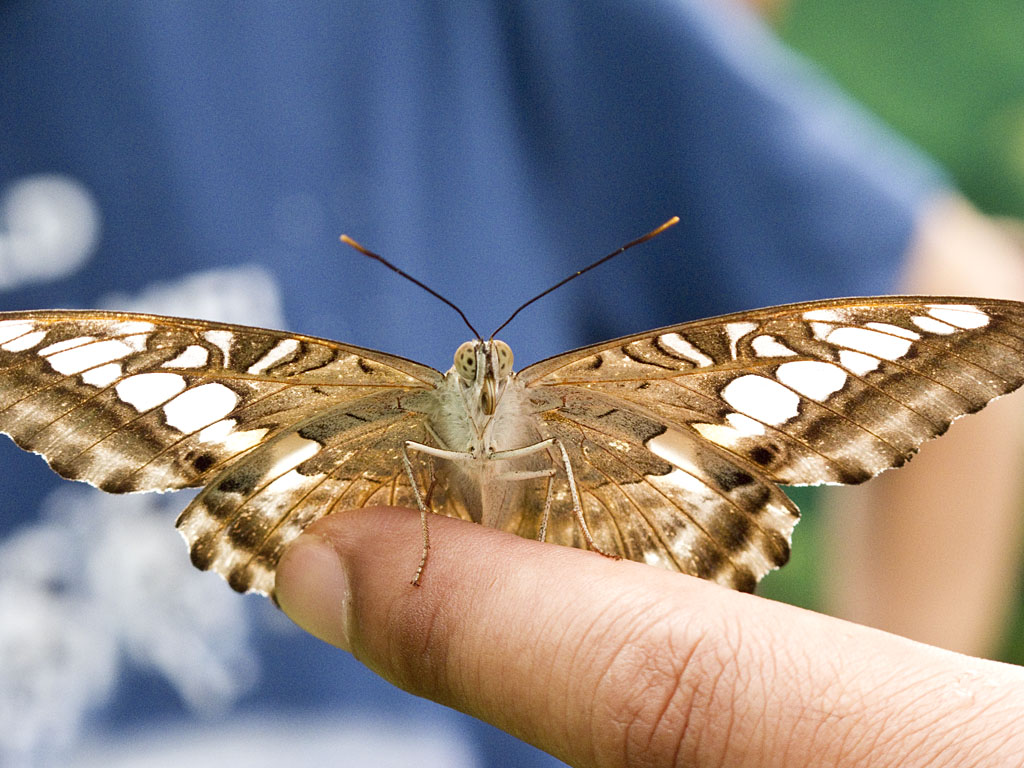
[Photo: Taken at the butterfly farm of EDC in Bicol]

Last year (March 2012) the Postnovitiate community went to Bicol for our yearly summer outing. We wanted our Postnovices to visit our Salesian houses in Naga and in Legazpi, as well as the local tourist spots.
We went to Naga cathedral, seminary and museum, the Basilica and shrine of our Lady of Penafrancia, the Panicuason hot springs, Cagsawa, Daraga church, the house of the congregation founded by St. Louis Guenella and the BacMan Geothermal Production Field.

The field trip to BacMan was the most special. It covers the boundary of Legaspi City, Sorsogon City, Bacon District of Sorsogon City and the town of Manito Albay in the Bicol Region, South of Luzon.

It is owned by EDC. Its official website says: “Energy Development Corporation is a pioneer in the geothermal energy industry with more than three decades of proven business viability. It has helped discover new ways of developing and commercializing renewable energy right at the heart of the resource – wherever the location and whatever the condition. From exploration and production of water-based steam power to generation of electricity for commercial use, we build some of the world’s pioneering and most complex steam fields.”

Besides viewing the geothermal plant from afar, we were also brought to the Twin Falls, the hot spring and steam vents (the smell of sulphur was strong but bearable) and the butterfly farm. It was there that we were able to see a variety of butterflies. And we were delighted to have them rest on our fingers after some cajoling.

The farm has a chart containing the life cycle of a butterfly: egg, caterpillar, pupa or chrysalis and finally, adult or imago. It served as a review of what we had already taken up in biology. But now it serves another purpose, a spiritual one. It is a good reminder of the transformation that should happen to us during the season of Lent and which should culminate with Easter. Moreover, the pupa stage also seems to me to be an appropriate image for Jesus in the tomb while the adult stage expresses well his Resurrection from the sleep of death.

May our good will and the grace of God help us achieve this transformation, this metanoia that is at the heart of Ash Wednesday ritual. 

Saturday, March 9, 2013

THE MAN ON THE SHROUD


[Photo – 3-D rendering of the image found in the Shroud of Turin. Photo taken at the Santa Croce in Gerusalemme, Rome.]

[This piece is not my own. I no longer know where I got it.]

WHAT IS CRUCIFIXION?

 A medical doctor provides a physical description:

 The cross is placed on the ground and the exhausted man is quickly thrown backwards with his shoulders against the wood. The legionnaire feels for the depression at the front of the wrist. He drives a heavy, square wrought-iron nail through the wrist deep into the wood. Quickly he moves the other side and repeats the action, being careful not to pull the arms too tightly, but to allow some flex and movement. The cross is then lifted into place. 

The left foot is pressed backward against the right foot, and with> both feet extended, toes down, a nail is driven through the arch of each, leaving the knees flexed. The victim is now crucified. 

As he slowly sags down with more weight on the nails in the wrists, excruciating fiery pain shoots along the fingers and up the arms to explode in the brain- the nails in the wrists are putting pressure on the median nerves. As he pushes himself upward to avoid this stretching torment, he places the full weight on the nail through his feet. 

Again he feels the searing agony of the nail tearing through the nerves between the bones of his feet. As the arms fatigue, cramps sweep through his muscles, knotting them deep relentless, and throbbing pain.
With these cramps comes the inability to push himself upward to breathe.  Air can be drawn into the lungs but not exhaled. He fights to raise himself in order to get even one small breath.

  Finally, carbon dioxide builds up in the lungs and in the blood stream, and the cramps partially subsided. Spasmodically, he is able to push himself upward to exhale and bring in life-giving oxygen. 

Hours of limitless pain, cycles of twisting, joint-renting cramps, intermittent partial asphyxiation, searing pain as tissue is torn from his lacerated back as he moves up and down against rough timber. Then another agony begins: a deep, crushing pain deep in the chest as the pericardium slowly fills with serium and begins to compress the heart.

It is now almost over-the loss of tissue fluids has reached a critical level the compressed heart is struggling to pump heavy, thick, sluggish  blood into the tissues-the tortured lungs are making frantic effort to  gasp in small gulps of air. 

He can feel the chill of death creeping through his tissues. Finally, he can allow his body to die. All this the Bible records with the simple words, "and they crucified Him" (Mark 15:24).

What wondrous love is this!

Imagine the pain and suffering our Lord, Jesus Christ went through for us. Because of the brutality, crucifixion was given a sentence to only its worst offenders of the law. Thieves, murderers, and rapists would be the types who got crucified. Yet, here Jesus is being crucified between two hardened criminals. What did Jesus do? Did he murder anyone? Did he steal anything?

The answer as we all know is NO!! Jesus did nothing to deserve this type of death, yet he went willing to die, between 2 thieves, so that we might be saved. 

Saturday, March 2, 2013

LAKE CALIRAYA


[Photo: Caliraya Lake]

Laguna Travel Guide describes Lake Caliraya this way: “Interestingly, Lake Caliraya in Laguna is a man-made lake situated in three towns - Lumban, Cavinti and Kalayaan. In 1937,  US Army Engineers created Lake Caliraya by flooding the Cavinti valley of Sierra Madre in order to generate hydroelectric power for Metro Manila. Entrepreneurs then saw the potential of the area and built two communities as ecological destinations where one can enjoy nature's unspoiled beauty. The man-made lake covers partly submerged land areas and this resulted to numerous islands complete with coves. These islands are now built with vacation houses, private villas, and resorts.”

October 26, 2011. Our community went up to Caliraya for our semestral break outing. There are two routes to Caliraya: via Rizal and via Laguna. The same Laguna Travel Guide gives the following directions for those wanting to take the Laguna route: “Take last exit to Calamba (via SLEX), turn right to Calamba Junction towards Los Banos all the way to Pagsanjan Church. Turn left passing through to Palacol Bridge going toward Barangay Bagong Silang and start ascent to Caliraya Lake.”

Although our starting point was Canlubang , the trip was a bit long. On the upside the roads were generally good, except for some portions on the way up to the lake. Since it was still early and the weather was cool and inviting, we decided to take a breather along the last leg of the journey and take pictures. (With the advent of digital cameras, photography has been democratized and you cannot claim something happened unless you are able to provide pictures to back it up.)

The scenery before us was nothing but one of peace and quiet, broken only by the occasional rustling of leaves and the happy chirping of birds—until we came. The countless picture-taking, individual and group shots, was accompanied by a Babel of voices—“Let’s take a picture here.” “Take a second shot.” “1, 2, 3, smile!” “Here. Take the camera. I want to have my picture taken, too.” And before we left, someone reminded us about the obligatory jumping shot.

The resort we went to was called Caliraya Paradise. It was leased to a Korean couple who happened to be Catholics. The resort was clean, well-kept and had large open spaces. An added bonus. We had the resort to ourselves. Perhaps, it was because it was a weekday. On the second day of our stay a family did come, a couple and their daughter. We learned that they were the owners of the Rudy Project business. But they did not stay long. They left sometime after lunch.

I appreciated spending our semestral break at Caliraya Paradise. I wanted the escape to a place that was peaceful, quiet and isolated. That’s the way I get my batteries recharged.

Lent is a time for re-charging our batteries. It is a time for getting re-energized. In religious terms, lent is a 40-day retreat meant to make us fit and strong for spiritual combat. Just like the Master who went to the desert to do battle against Satan and came out victorious, so also we enter the Lenten season in the hope of victory against the evil desires the pull our hearts away from God.

These are the traditional Lenten practices that are available to us for this spiritual combat: prayer, fasting and almsgiving. They have to be understood in broad terms. Prayer is taking time out for God. It is sharing with God what’s happening in our minds (share with him our thoughts) and in our hearts (share with him our feelings). Fasting is not just about food. It is about depriving ourselves of things that we like in order to strengthen our capacity to say “no” to temptation. If we are able to say “no” to smoking during Lent, it is highly probable that we can say “no” to temptation. Almsgiving is not just about giving something to beggars, although this is stressed in the Bible. It is also about any act of kindness.

The Ash Wednesday ritual is accompanied by the words “Turn away from your sins and believe in the Gospel.” If we do turn away from sin, where do we turn? We turn to God. Turning away from sin in order to turn to God is what we usually call conversion. But I prefer the expression “pagbabalik loob sa Diyos” (reconciling with God). And to me, this is the highlight of Lent. And this we celebrate in the Sacrament of Reconciliation. Lent, therefore, would be seriously incomplete with going to confession.